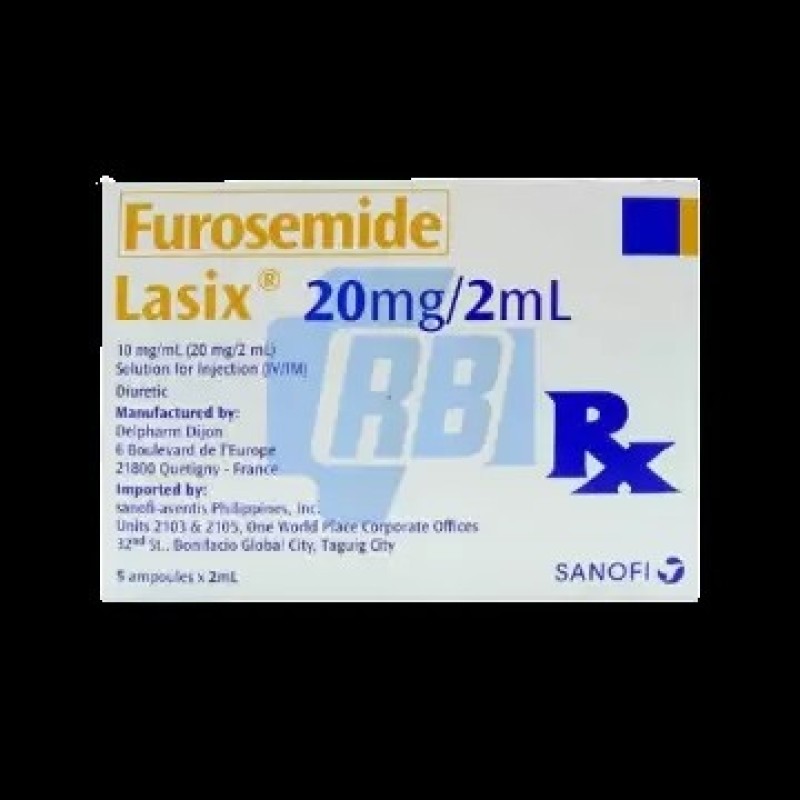
What Defines Lasix Sanofi
Lasix Sanofi, a well-known diuretic medication, primarily works by inhibiting the reabsorption of sodium and chloride in the kidneys, leading to increased urination and promoting the elimination of excess fluid from the body. This mechanism is pivotal for treating various medical conditions, particularly those associated with fluid retention, such as heart failure, liver cirrhosis, and certain kidney disorders. The effectiveness of Lasix Sanofi is largely attributed to its active ingredient, furosemide, which offers rapid and substantial diuretic action.
Key features of Lasix Sanofi include its potent diuretic activity, quick onset of action, and ability to manage fluid overload efficiently. As a loop diuretic, it operates on the loop of Henle in the nephron, differing from other diuretics in its strength and speed of action. Lasix Sanofi is generally administered in situations where immediate diuresis is required, such as in acute heart failure or during kidney impairment, making its timely use essential in emergency medical scenarios.
Forms of Release for Lasix Sanofi
Lasix Sanofi is available in several formulations to accommodate different patient needs and treatment requirements. The main forms include oral tablets, which are often prescribed for long-term treatment, and an injectable solution that can be used in acute situations for rapid effect. The oral form is typically available in various strengths, allowing healthcare professionals to tailor the dosage based on the severity of the condition and the physiological response of the patient.
The injectable form is particularly important in hospital settings, where immediate diuretic action is crucial. This versatility in administration routes makes Lasix Sanofi a valuable option for managing fluid retention across a wide range of clinical situations. Whether a patient requires ongoing management at home or immediate intervention in a hospital,Lasix Sanofi offers suitable formulations to address those diverse needs.
Why Choose Lasix Sanofi Over Other Substances
One of the primary advantages of Lasix Sanofi compared to other diuretics is its potent effectiveness and rapid onset of action. While thiazide diuretics and potassium-sparing diuretics may be less potent, Lasix Sanofi provides significant diuresis, making it particularly advantageous for patients with severe fluid retention or those needing rapid intervention.
Additionally, Lasix Sanofi has a unique pharmacokinetic profile that allows for flexibility in dosing. The possibility to adjust dosages based on individual response helps in managing diverse patient populations effectively, especially those with varying degrees of renal function. Moreover, Lasix is a well-established medication, extensively studied, with a robust safety and efficacy profile, making it a trusted choice among healthcare professionals for managing fluid overload.
Long-Term Effects and Contraindications
When used appropriately, Lasix Sanofi can provide significant long-term benefits for managing fluid retention. However, potential long-term use must be carefully monitored due to possible side effects, such as electrolyte imbalances (e.g., hypokalemia), dehydration, and renal impairment. Patients should be aware of the contraindications associated with Lasix Sanofi before commencing treatment. It is not recommended for individuals with anuria, severe electrolyte depletion, or hypersensitivity to furosemide. Furthermore, caution is advised for its use among pregnant women and children, as the effects in these populations are not fully understood.
Patients with certain conditions, such as liver disease or significant renal dysfunction, should also consult healthcare providers for tailored advice. Understanding these contraindications ensures that Lasix Sanofi is used safely and effectively, minimizing risks while optimizing therapeutic outcomes.
Practical Advice for Using Lasix Sanofi
When considering the initiation of Lasix Sanofi, it is vital to consult with a healthcare professional to determine the appropriate dosage based on individual medical history and current conditions. Patients should follow recommendations regarding the timing of doses and the necessity of monitoring their fluid intake and output closely. Regular follow-up appointments can be beneficial for assessing the drug's effectiveness and adjusting treatment plans as needed.
Educating oneself about potential side effects and monitoring for symptoms, such as dizziness, weakness, or unusual fatigue, aids in making informed decisions regarding health management with Lasix Sanofi. Ongoing communication with healthcare providers ensures that patients remain informed about their treatment progress, allowing them to reap the full benefits of Lasix Sanofi while minimizing any associated risks. Overall, proper usage and oversight of Lasix Sanofi can lead to effective management of fluid retention and improved patient outcomes.